
How to Visit a Himba Tribe Ethically and Responsibly In 2026


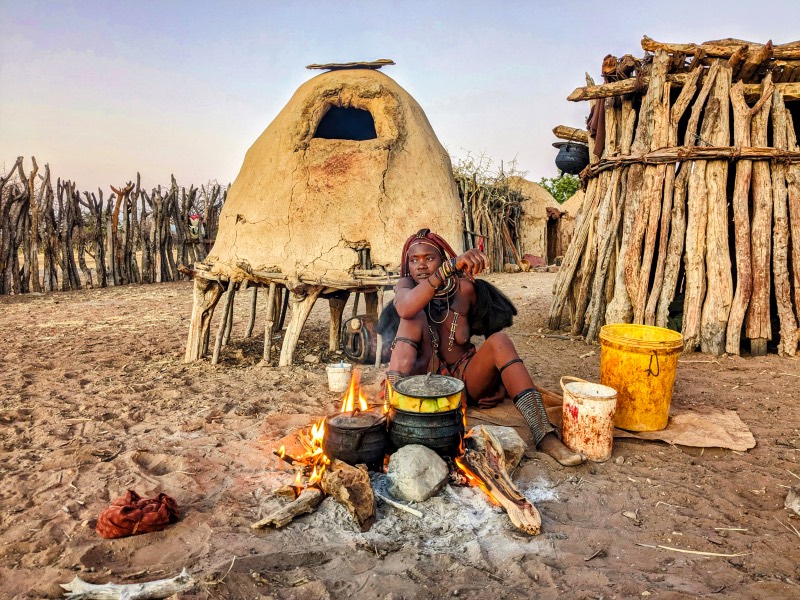
Spend any time researching Namibia and you’re bound to come across photos of the Himba Tribe: women covered in red ochre and elaborate jewellery, with a dazzling hairstyle.
As one of the last few semi-nomadic Indigenous communities in the world, spending time in a Himba village in Namibia is an incredible experience.
With the rise of tribal tourism, however, it’s important to ensure your visit to a Himba tribe is ethical.
Want to learn how to visit a Himba tribe ethically and responsibly? Well, you’re in the right place. Read on for our complete guide to responsibly visiting a Himba tribe in Namibia.
Namibia Travel Resources
- Getting there: search for flights to Namibia
- Guidebook: pick up a copy of Bradt’s Namibia
- How to get around Namibia: rent a car or 4WD
- Travel insurance: get travel insurance for your Namibia adventure
- Money: get a Wise travel card to save big time in Namibia
- Tours: explore the best tours in Namibia
Who Are The Himba?
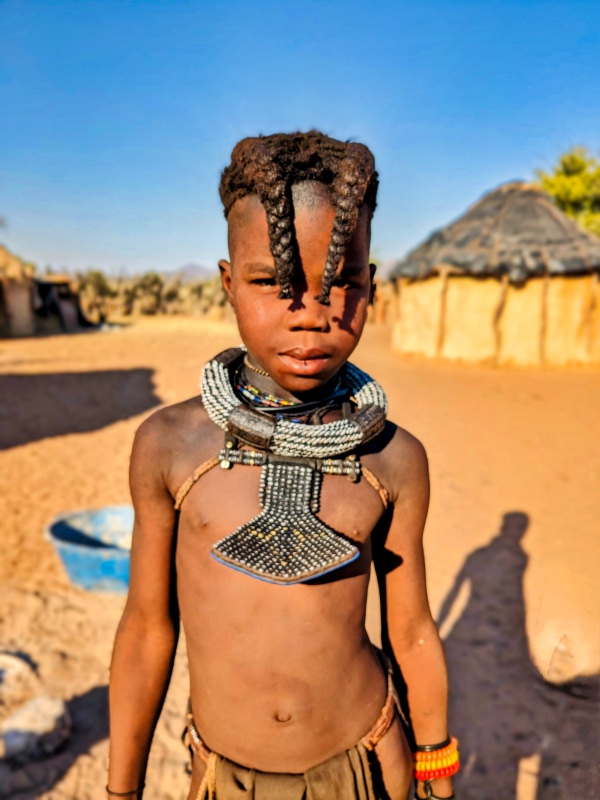
First of all, who are the Himba?
The Himba are a minority Indigenous group in Namibia (comprising less than 1% of the population) who live almost entirely in their traditional areas in remote Kaokoland (now known as the Kunene region).
They number around 50,000 total and live in the north of the country near the border with Angola (and in fact, there are some Himba villages in Angola).
The Himba are one of the last few semi-nomadic Indigenous groups in the world and have a fascinating culture. For this reason, many visitors to Namibia hope to visit a Himba village.
Read next: 10 Epic Namibia Camping Sites + Essential Tips
Himba Culture
The Himba have a very well-preserved, traditional culture. Their society is traditionally polygamous, with men having multiple wives. A Himba village is essentially a big family, with each wife having her own house.
A Himba village always includes a holy fire through which the community communicates with the dead.
The men tend to the cattle and are noticeably absent. In fact, we didn’t really see any when we visited. This leaves the majority of the work to the women, as in so many communities. Sigh.
Related: Fish River Canyon – The Essential Hiking Guide
The Himba live very traditionally and continue to live completely without technology. There is no electricity, no radios and no running water. There are rarely even phones – on our visit, we saw one woman with a burner phone that was used to communicate about matters in town. That’s it.
At night, to entertain themselves, they tell stories. Sometimes, the children sneak off and sing together (we were woken up by this in the middle of the night – it was adorable).
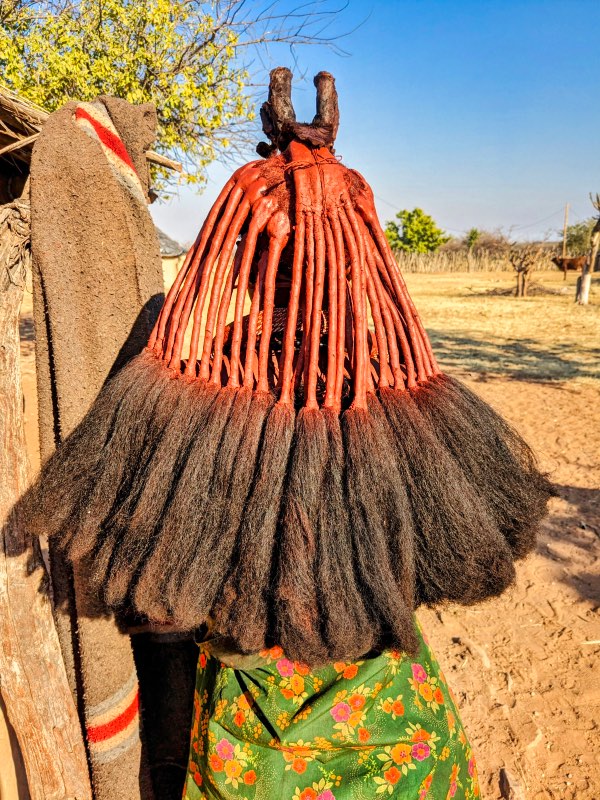
Physically, Himba women are very striking. The women are covered in red ochre, on both their skin and hair. They adorn themselves with elaborate jewellery and dress traditionally in a goatskin skirt and are topless.
Young girls wear their hair to the front and upon puberty, change their hairstyle to the red ochre dreadlock style that women wear.
They make many different crafts, which you will invariably be invited to purchase after a visit.
Going to Zambia? Check out our list of the best alternative things to do in Zambia
Should You Visit a Himba Tribe?
When done responsibly, a visit to a Himba village is an incredible experience. It provides you with the opportunity to witness a culture completely different from your own and a way of life that has survived for centuries.
Through a Himba tribe tour, you get to learn about many aspects of the Himba’s lives. A few things you’ll learn about include:
In addition, visiting a Himba tribe responsibly is a great way to support the local economy in an area that needs it. You’ll gain fascinating cultural insight and support the community at the same time. Win!
Read next: The Ultimate Guide to the Caprivi Strip
How to Visit a Himba Tribe
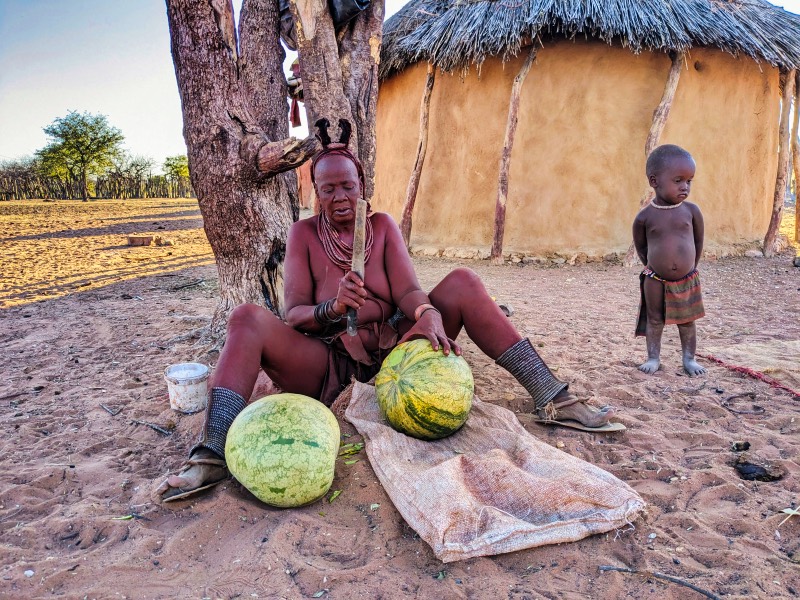
Himba tribe tours are becoming a big thing in Namibia, so there are many ways to organise a visit to a village.
Pretty much every guesthouse in the Kaokoland region will offer a Himba tribe tour, but these can be quite commercial and even somewhat staged. If you’re going to go this route, at the very minimum, ensure that your guide is a local Himba. Better yet, try to pick someone who has experience with anthropology and sustainable tourism.
There is also the Ovahimaba Living Museum, but again, this has been somewhat saturated with tourists and from all accounts, doesn’t offer the most authentic experience.
For the most immersive experience possible, we highly recommend organising your Himba tribe tour through the Kaoko Info Centre in Opuwo. This organisation is run by Himba people, for the Himba. It’s an ethical and responsible option.
Visiting with them didn’t feel like a typical tour. Rather, it felt like we were anthropologists, just observing this fascinating community as they went about their daily lives. It was as real and authentic as it comes.
We can personally recommend our guide, Tjingi Tjinginda. He can be contacted on WhatsApp on +264 818 411 294 or via email at [email protected].
Tjingi speaks English well and is a local Himba man. Most of his regular clients are anthropologists whom he takes out for weeks on end. He listened to us when we explained what we were looking for in a visit and he did a great job of explaining things during the course of the visit.
Read more about visiting Kaokoland with our complete guide
Visiting a Himba Village: Day Visit or an Overnight Visit?
If you organise your visit through the Kaoko Cultural Centre, you have the option of either a day visit or an overnight visit.
To get the most out of the experience, we highly recommend choosing an overnight visit to a Himba village.
This is by far the best way to get the best sense of the community’s lives. By spending the night with the Himba tribe, you’re less likely to feel like a fly-in/fly-out tourist, you spend more time with the community and get to engage on a deeper, less superficial level.
We loved it.
Related: A Complete Guide to Visiting Spitzkoppe
Choosing a Himba Village to Visit
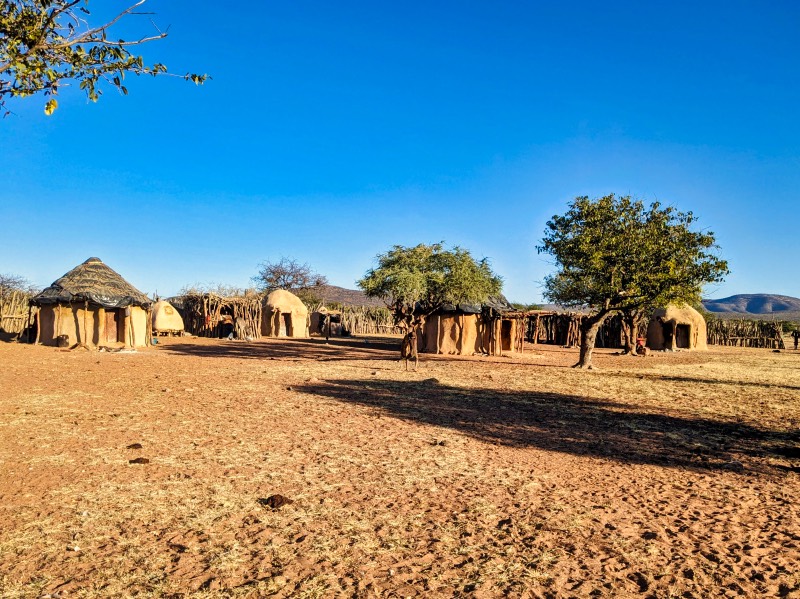
Any Himba tribe that you choose to visit near Opuwo will be an authentic Himba village. Just drive for 20 minutes outside town and you’ll see many, many villages!
But, to get a more authentic experience, we recommend picking a community a bit further away from Opuwo. By doing so, you’ll visit a Himba tribe village that sees fewer tourists and is less ‘changed’ by tourism.
How far should you go? You don’t have to go miles away. 40-50 km away from Opuwo is a good benchmark. You can, obviously, go further, but this is a good place to start.
Your guide will decide which village best suits you – they’re the experts here. They’ll know the communities, so speak with them about what you’re looking for and they’ll make the choice as to which one to visit.
How Much Does it Cost to Visit a Himba Tribe?
The price of visiting a Himba tribe will vary, depending on the type of tour you choose. Obviously, an overnight tour costs more than a day visit, but again, is well worth the extra cost.
At the Kaoko Info Centre, the listed prices are 300 NAD per person for a day visit and 600 per person for an overnight visit. Be sure to negotiate the price of the visit. In our experience, there is ample room for negotiation.
On top of the visit cost, you will be expected to bring gifts for the village. This will likely take the form of food.
Most likely, your guide will accompany you to the supermarket (OK Foods) and go shopping with you.
Otherwise, they’ll give you guidance on what to buy. Think maize meal, sugar, cooking oil – these are the big hits. For 2 people, you should buy about 500 NAD worth of food.
Whilst we recommend negotiating the price of the visit, don’t skimp on food for the village. They’re the ones opening up their lives for your benefit and they should be compensated as such.
What to Expect on a Visit to a Himba Tribe
What should you expect when visiting a Himba tribe? Again, that will depend on how you’ve organised your tour, but we’ll write from our experience with the Kaoko Info Centre.
Firstly, you have to drive out to the Himba village in your own car and your guide will come with you.
Often, the village won’t know you’re coming. We organised our visit the day before, and even if there was time to notify the community, there was no reception to call them. Be prepared to just show up as they are going about their day.
When you arrive, the guide will leave you in the car whilst he goes and speaks to the community to let them know what’s going on.
We found the Himba people really welcoming. We walked around the village and were introduced to the senior family members. The guide will translate for you.
We watched them prepare their dinner and do some beauty maintenance. We asked questions and they asked many questions of us.
When it got dark, we left for a while to prepare our dinner and joined them later in the evening. We were very fortunate to be invited into a home, where we talked about our lives.
It’s important to note that you should not expect any organised activities when you visit a Himba village. They’re not there to entertain you (nor should they be). Essentially, during a visit, they will go about their daily lives, and you, as the visitor, get the privilege of joining in.
If you are doing an overnight Himba tribe tour, you need to be completely self-sufficient. The village will not put you up. This means you’ll need a tent, plus all of your own supplies for cooking and washing for the night and morning. Think wild camping (in fact, you’ll probably camp just outside the village).
You’ll also probably have to feed your guide as well, so be prepared to cook some extra food for them.
Himba Tribe Tour: Etiquette
It goes without saying, but we’ll say it anyway: when visiting a Himba tribe, don’t treat them like animals in a zoo. These are people. Treat them with dignity and respect.
Ask your guide to teach you a few words, like hello (‘moro’) and thank you (‘okuhepa’). It’s a great way to engage with them and show interest in the Himba culture.
Do not take photos of anyone without asking first.
Besides your gift of food for the village, do not give money or sweets to the children.
Tips for Visiting A Himba Tribe
- Bring some first aid kit supplies. Obviously don’t try to be a doctor (unless you’re an actual trained doctor), but bringing some supplies like painkillers, bandages and antiseptic will be most welcome. We saw a lot of untreated injuries and infections that benefited from some basic first aid.
- Be sure to ask questions and show interest. Think of some questions in advance. There are a lot of fascinating things to learn about the Himba culture. But at the same time, don’t feel pressure to chat a lot either. A lot of the Himba tour will just be observing their lives.
- Bring pictures from home to show the community. This was a BIG hit. I showed photos of my family in Canada, including pictures of snow and some of the Canadian wildlife. The community was fascinated to learn about my life too.
- Come with the most open mind possible.
Where to Stay in Opuwo
Kaoko Mopane Lodge and Campsite
This a great option, whether you’re camping or need a room. The campsite is the best in town and affordable.
Disclaimer: This post may contain affiliate links. If you buy or book anything through them, we’ll earn a small commission at no extra cost to you. Thank you for supporting this website!

We went to a village situated 40km far from opuwo with the guide you recommended in your article and what a day! It was wonderful, exactly as I expected. We could have time to exchange with the Himba, playing with children. He taught us a lot about their way of life. Thank you for your precious article.
Hi Camille – we are so happy to hear that! We loved our experience and are glad you did too. Thanks for taking the time to let us know.
Thank you for the article. We contacted the guide you recommended directly and we had a wonderful time. It really did feel authentic and ethical. I can highly recommend Tjingi.
That’s so incredible to hear! Thank you for letting us know 🙂