
Spitzkoppe Hiking & Camping Guide: What You Need to Know In 2026


Spitzkoppe is one of Namibia’s most famous attractions and its popularity only seems to be growing each year.
It’s easy to understand its popularity: think spectacular red bald granite peaks, rising straight from the desert floor.
Add to the mix some wonderful camping sites and some of the world’s best star-gazing and you have one hell of a desert destination.
Keen to check it out for yourself?
Read on for our ultimate guide to Spitzkoppe for essential tips on camping, hiking and all the best things to do in this incredible destination.
Namibia Travel Resources
- Getting there: search for flights to Namibia
- Guidebook: pick up a copy of Bradt’s Namibia
- How to get around Namibia: rent a car or 4WD
- Travel insurance: get travel insurance for your Namibia adventure
- Money: get a Wise travel card to save big time in Namibia
- Tours: explore the best tours in Namibia
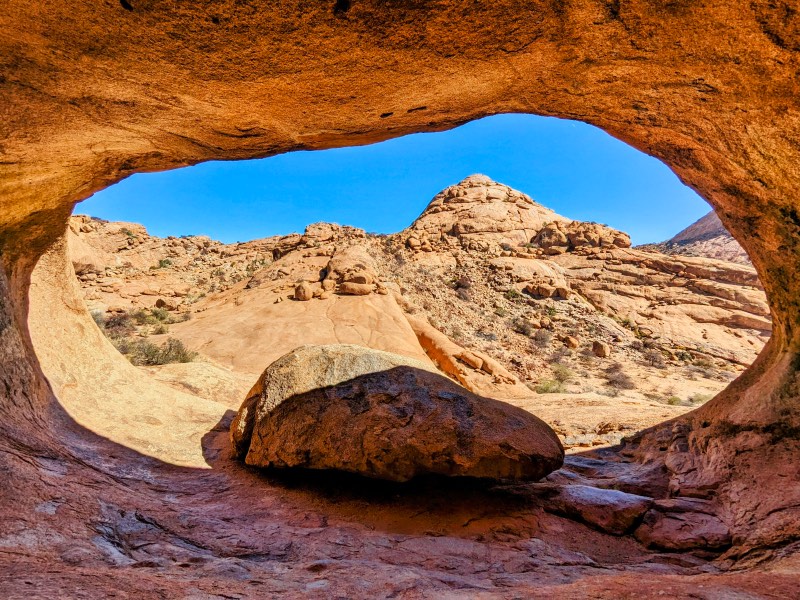
This reserve is home to a cluster of granite mountains that are more than 120 million years old. They’re visually stunning, and all the more so because they rise out of the desert floor.
There are a number of peaks within the reserve, the most famous being Spitzkoppe, Klein Spitzkoppe and the Pontok Mountains.
Of these, Spitzkoppe Mountain is the best known. It’s not only the highest in the park (at 1728 metres) but it also just happens to resemble the famous Swiss mountain, earning it the nickname ‘the Matterhorn of Africa’.
As for wildlife at Spitzkoppe, expect to see A LOT of chubby rock dassies, which call the area home. If you’re really lucky, you may spot a leopard high up, gazing down on you. (But don’t get your hopes up).
Where to next? Check out Kaokoland and Epupa Falls
Spitzkoppe Location
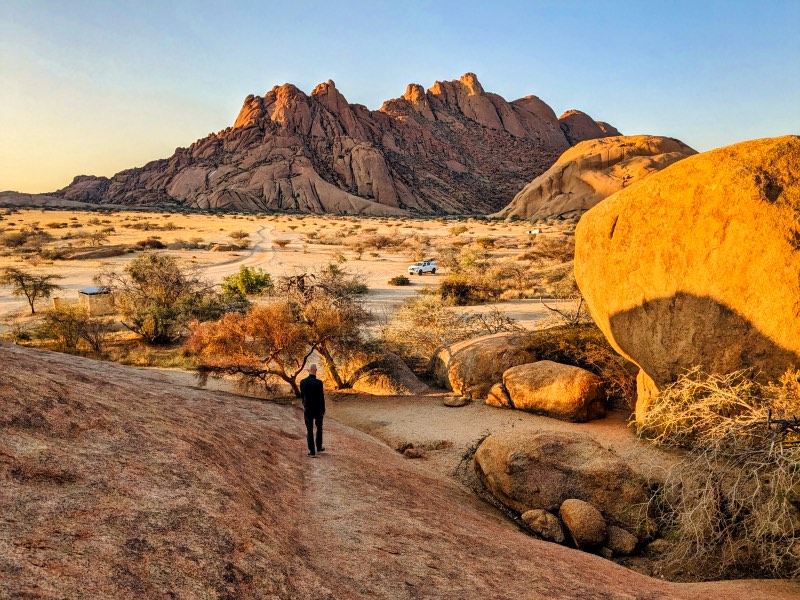
Spitzkoppe is located in the Namib desert in the central-eastern Erongo region of Namibia.
Spitzkoppe is approximately 160 kilometres northeast of the popular tourist resort, Swakopmund, and 280 kilometres northwest of Namibia’s capital, Windhoek.
Read next: How to Visit a Himba Tribe Ethically and Responsibly
Spitzkoppe Entrance Fee
It currently costs 130 NAD pp to enter the Spitzkoppe Reserve.
If you are camping at Spitzkoppe (recommended!), then this fee is included in the camping price.
There are two entrance gates to the reserve. The main entrance is in the south, where you’ll find the reception, showers and restaurant. The second gate is on the park’s western side, about a 10-minute drive through the park to reach the main entrance.
How to Get to Spitzkoppe
If you’d like to visit Spitzkoppe independently, you need your own set of wheels (as is the case with the rest of Namibia).
Fortunately, Namibia excels at car rentals, especially those with rooftop tents and all the associated camping gear. This is our first choice, not just for visiting this area, but for travelling all over Namibia.
Pro tip: use Discover Cars to find the best deals on rentals. You’ll find the best deals for your Namibia car rental!
Of course, visiting Spitzkoppe as part of a tour is always an option and the many tour buses going through the park attest to this.
If you’re interested in visiting on a tour, you can go on a full-day trip to Spitzkoppe or for a 2-day camping and hiking trip – both are highly rated, excellent options!
Best Time To Visit Spitzkoppe
Spitzkoppe can be visited year-round. However, like most places to visit in Namibia, the best time to visit Spitzkoppe is during the winter (May to October).
During this time, the weather is exceptionally pleasant. You can expect warm, sunny days and cool evenings. Plus, the skies are perfect for stargazing. It’s paradise!
If you visit outside this time, expect hot weather and occasional downpours. This rare rain in the desert creates remarkable scenery but also presents challenges for driving. Be sure to have a 4×4 if visiting Spitzkoppe in the summer.
Camping at Spitzkoppe
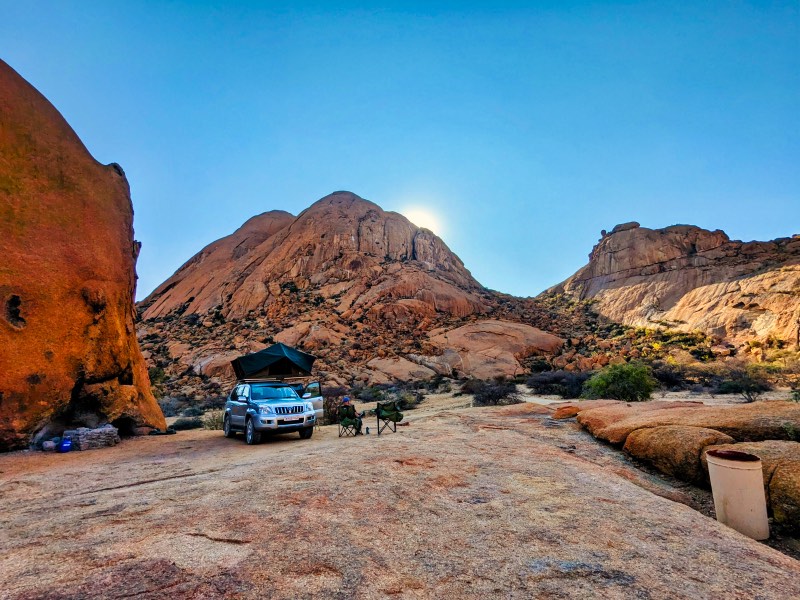
For most visitors, spending a night camping at Spitzkoppe is the main attraction and why they come to visit.
With vast open spaces, psychedelic rock formations and some of the best night skies in the world, Spitzkoppe camping completely embodies the full desert camping experience.
In fact, we rank it as one of the top camping experiences you can have in Namibia.
There are two main camping options at Spitzkoppe:
Spitzkoppe Community Rest Camp
Spitzkoppe Community Rest Camp (“the Community Camp”) is the ‘main’ Spitzkoppe campsite and what most people think of when they imagine camping at Spitzkoppe. It’s a community-run, basic campsite set inside the Spitzkoppe Mountain Reserve.
The Community Camp is famous for its large, private camping sites set pretty far apart. That said, I was somewhat surprised when we rocked up to see some in relatively close quarters.
Read: 10 Epic Namibia Camping Sites + Essential Camping Tips
Bookings
It’s worth noting that the Community Camp gets really busy in the high season (June – September), so if you’re visiting during that time, it’s best to try to book ahead.
The website is temperamental, so calling the campsite is the best option. We just rocked up in June without a reservation and managed to get a spot, but it was busy and the choice of campsites was limited.
The 31 campsites at Community Camp are on a first-come, first-served basis. This means that even if you have a booking, you are not pre-allocated to a site.
When you get there, you are given a map and the freedom to drive around and pick your own site. The map they give you is rubbish and confusing.
Important: if you see a campsite that has chairs in it, this means it’s reserved. Don’t be a dickhead and steal it from someone.
Best Campsites at The Community Camp
The popular Spitzkoppe campsites get snatched up pretty quickly. These seem to be the ones on the western side of the reserve.
Fortunately, this means that the eastern side of the reserve is pretty much ignored, and we think the best camping sites are found there! These campsites have equally good views, more seclusion and far fewer people.
We personally recommend campsite # 17B. It’s fantastic and since very few people go to the far east end, it’s very private with great views.
Campsite #18A/B is directly across from 17B and is another great option. It’s nestled in the mountain and quite secluded.
Overall, campsite # 1 is probably the most outstanding, but can get really windy, which can make camping there quite tricky.
Facilities at The Community Camp
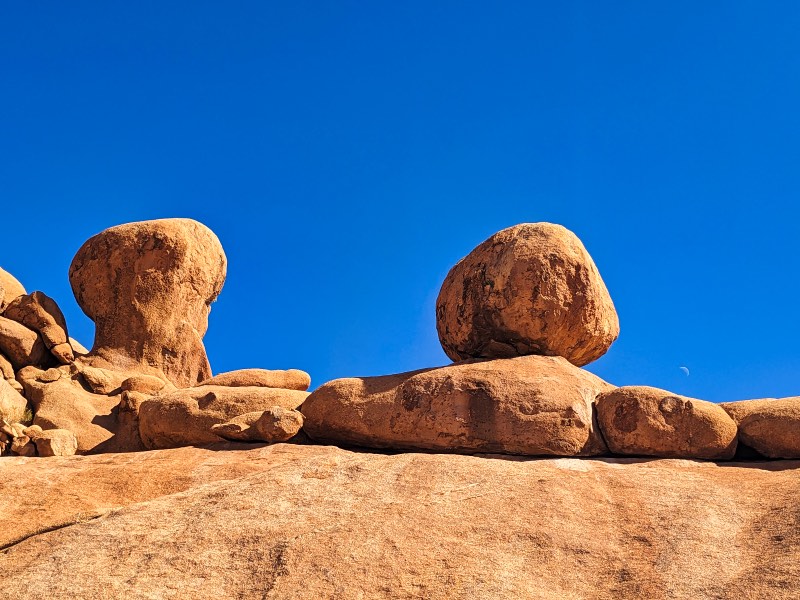
We’ll be honest: camping at the Community Camp is essentially wild camping. There are long drop toilets at each site (bring your own TP), maybe a fire ring and that’s about it.
You can find potable water at the reception, along with communal ablutions with hot water showers. There’s also a cute restaurant at the reception, and while we didn’t eat there, the reviews are pretty good.
However, the reception area is very far from any of the actual sites, so don’t plan on walking back and forth. If you need to go to the reception area for anything, you’ll have to drive.
Community Camp Cost
Camping at the Community Camp costs 220 NAD per person per night (pppn).
While it’s pretty expensive for essentially wild camping, it is a beautiful spot and the money supports the community.
The fee also includes your Spitzkoppe entrance fee (130 NAD pp), so if you plan on spending any time inside the park, it really is a better deal to spend the night.
Spitzkoppe Tented Camp
Located around 500 metres outside the Spitzoppe Mountain Reserve, the Spitzkoppe Tented Camp (“the Tented Camp”) is a different campsite from the famous Community Camp.
The Tented Camp has pre-set-up bush tents and offers a bit more in the way of comfort and facilities than the Community Camp.
This is best for those who don’t have their own gear or are just seeking a few more amenities than the Community Camp can provide.
The space is quite beautiful and offers great views of Spitzkoppe, even though you are located outside of the reserve.
Tented Camp Facilities
Each tent at the Tented Camp has its own private bathroom, electricity and braai area.
The bathrooms have a flush toilet and a shower – although reports go back and forth whether the water is actually hot or not.
Tented Camp Cost
The Tented Camp costs 220 NAD pppn, but importantly, does not include entrance to the reserve (an additional 130 NAD per person).
Travel insurance is a must when exploring a destination like Spitzkoppe. Whether you’re there for camping under the stars or hiking the dramatic rock formations, having coverage keeps your trip stress-free. We trust and recommend SafetyWing— they’ve proven to be the best after countless travels!
Wild Camping at Spitzkoppe
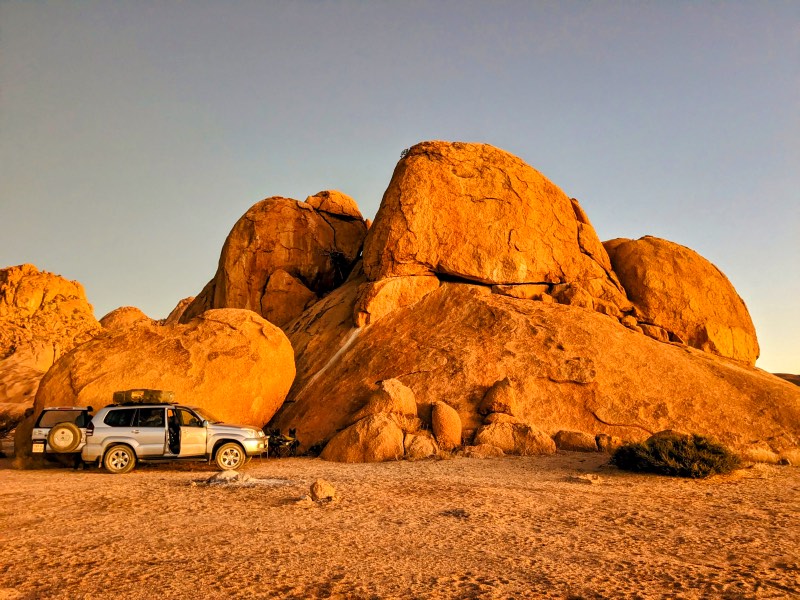
There are some really nice wild camping options around Spitzkoppe, but we don’t think it would be a responsible move to publish them on the Internet, so you’ll just have to look around to find them…
Be aware though, they can get really windy. Like, really, really windy.
For more excellent wild camping in Namibia, read about exploring the Caprivi Strip
Spitzkoppe Accommodation
If you don’t want to camp or don’t have enough gear to do so comfortably, there are some wonderful accommodation options at Spitzkoppe.
The Spitzkoppen Lodge is the only accommodation located within the Spitzkoppe Reserve. The Lodge rents out beautiful chalets with impeccable views and there’s a pool onsite. This is African luxury at its finest!
For a more budget-friendly alternative, try Okambishi’s Rest. While not located within the reserve, you’ll still get a great desert ambiance. The self-catering apartments are very comfortable!
Spitzkoppe Activities
The main things to do at Spitzkoppe are checking out bushman art, hiking, casual walking, stargazing and just enjoying the incredible desert scenery.
Guided Hikes at Spitzkoppe
Unfortunately, all official hiking at Spitzkoppe must now be done with a guide. Welcome to Africa, baby!
(Side note: if you’re looking for an epic hike in Namibia that you can do without a guide, check out Fish River Canyon.)
There are a number of official Spitzkoppe hikes, which we have outlined below. These must be arranged in advance at the Community Camp reception.
Guides must be picked up at reception at a previously agreed-upon time (preferably between 6:30 am and 8:30 am) and must be transported in your car.
These are the official Spitzkoppe hiking trails:
1. Gross Spitzkoppe Hike
- Cost: 600 NAD pp
- Duration: 4 – 5 hours
2. Pontokke Hike
- Cost: 450 NAD pp
- Duration: Approx 3 hours
3. Golden Snake Hike
- Cost: Approx 3 hours
- Duration: Pricing is by group size – groups more than 4 cost 50 NAD pp; groups less than 4 cost 150 pp
4. Bird Hike (Herero Chat)
- Half day – 400 NAD pp
- Full day – 800 pp
Bushman Art at Bushman’s Paradise
Checking out the Bushman art is another justly popular thing to do at Spitkzoppe.
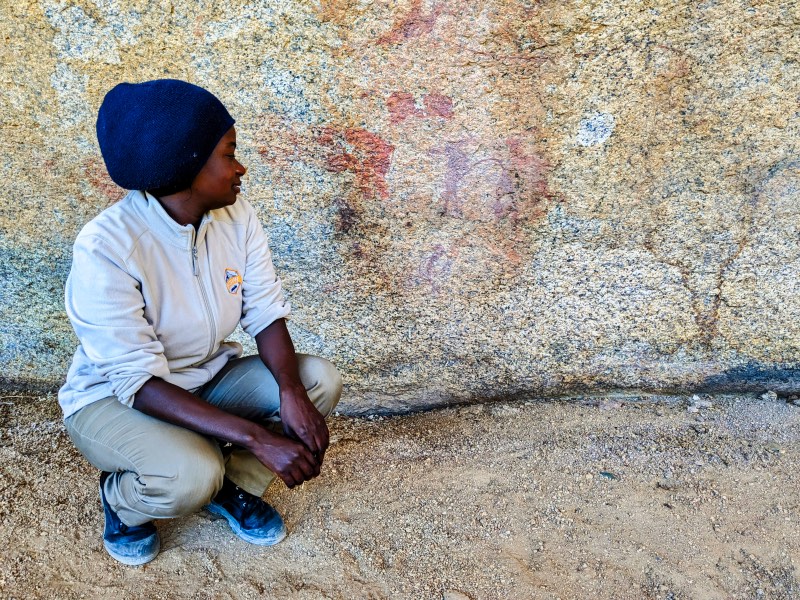
The rocks and caves around Spitzkoppe have paintings that are literally thousands of years old. These were created by the original inhabitants, the Bushman people.
You can access these cave paintings via two short guided walks: Bushman’s Paradise and Small Bushman’s Paradise. These do not need to be arranged in advance.
Guides sit at the Small Bushman’s Paradise and Chain Ladders from 8 am to 6 pm every day, so you just need to rock up to arrange a walk.
Both of these don’t have a formal cost and are only priced by way of a tip to the guide.
As a personal recommendation, the hike to Bushman’s Paradise is lovely and worth doing. It gives a good perspective of the rock, plus the rock art is cool.
We particularly enjoyed the explanations of both the history of the Bushman people and the current community.
We also loved our guide, Jennifer. Not only did she teach us about the historical and contemporary context at Spitzkoppe, but she taught us some language (made by different clicking sounds). She even wrote them down for us to practice later!
Informal Hiking at Spitzkoppe
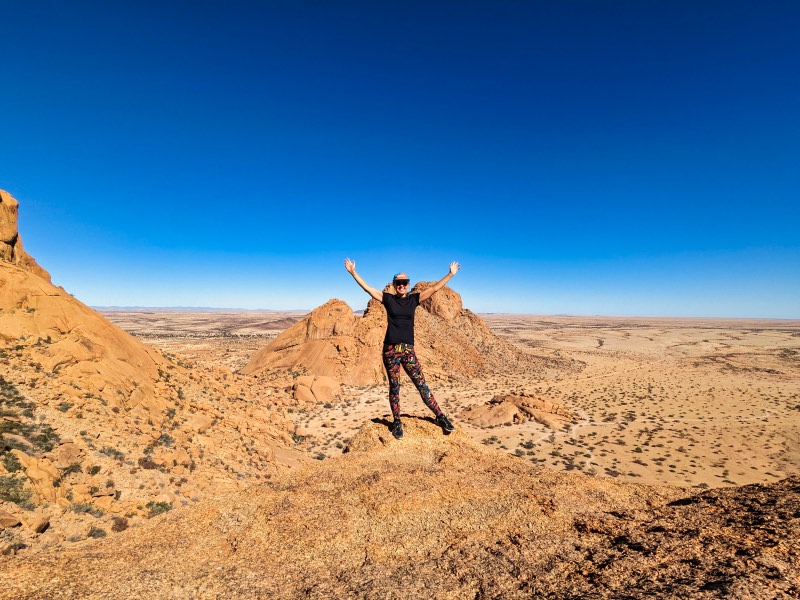
If you want a hike without a guide, there’s an informal Spitzkoppe hiking trail that you can do yourself that starts from campsite #10B which leads to a nice viewpoint of Sugarloaf.
There’s a clear trail with rock cairns to guide the way and it’s marked on maps.me.
The area is also good for casual rambling. You can just set out and find your own secret spots.
Visit the Rock Pool (Summer Only)
In summer, during the rainy season, you can visit the Rock Pool – a small, natural bowl that fills with water.
While some people claim to swim there, I’ve never heard of it being that full of water. I think you’d have to be really, really keen to give that a try!
Stargazing
Spitzkoppe, like all of Namibia, is famous for its stargazing. Due to the clear desert skies and lack of light pollution, the stargazing is truly epic and an essential Spitzkoppe activity.
We lived in the Australian Outback, so we know what incredible night skies look like. Let us tell you, they’re epic in Namibia!
Watch the Sunset at the Rock Arch
Desert sunsets are truly spectacular and Spitzkoppe is no exception. The shifting colours of the red rocks are sensational and never get old.
The most popular place to watch the sunset at Spitzkoppe is at the Rock Arch.
Honestly, we think the rock arch is a bit overrated. It gets super busy with the hordes from the tourist buses and those trying to get ‘the shot’ on Instagram. But, don’t let us influence you – check it out for yourself.
If you don’t want to visit the rock arch, there are tons of other spots to watch the sunset in peace and solitude. Go explore and find your own! Remember to bring a headlamp for the walk back to camp.
Rock Climbing
The granite rocks of Spitzkoppe are perfect for climbing and it has something of a cult following amongst climbers. Due to the heat in summer, winter is the best season for rocking climbing.
Like with hiking, any climbing at Spitzkoppe must be arranged in advance.
Tips For Visiting Spitzkoppe
Explore all Our Namibia Guides
Disclaimer: This post may contain affiliate links. If you buy or book anything through them, we’ll earn a small commission at no extra cost to you. Thank you for supporting this website!
